Introduction to the Parables of Jesus
1. Introduction.
Jesus was a master teacher. The Parables of Jesus Chris are some of the most well-known passages in the Bible. They are recorded in the four gospels and provide four similar but not identical stories and accounts where Jesus went, what he did and what he taught. Each parable has a meaning that had context at the time Jesus spoke to the multitudes.

The parables describe ordinary circumstances and situations that the people could understand easily. They were familiar with it. But their moral lessons teach us how to live as faithful Christians and as God intended it to be.
Jesus used parables to teach people about God's kingdom and also the way to salvation. At first these stories may not seem to have anything to do with God or salvation.
In the next weeks we will dive deeper into the parables to get a better understanding of them. The parables of Jesus, during his three years of His earthly ministry, are recorded in the four Gospels. In Matthew, Mark, Luke, and John we found "The Good News". Through His life, death, and resurrection, the Kingdom of God was launched here on earth, Jesus Himself announced the Kingdom of God through his famous teachings, the Sermon on the Mount (Matthew 5-7).
In the Gospels we see that His teaching was characterized by the use of parables. The Gospels record almost 40 different parables told by Jesus.
2. Meaning of the Term - Parable
It comes from two words in the Greek - "para" which means "alongside" and "bole" which means "to set." Therefore, the word "parabole" refers to something that is set alongside another for comparison and contrast of one thing beside another with a view to comparison"
Wiersbe's description of a Parable:
(a) "a story that places one thing beside another for the purpose of teaching"
(b) "It puts the known next to the unknown so that we may learn"
3. What is a Parable?
(a) A parable is like a combination of a story and a puzzle. Some of them are very straight forward and make a direct comparison between two things, but many are more complicated and tell a story which also has a partly hidden, deeper meaning.
(b) In the New Testament a parable is usually a story or narrative drawn from nature or human circumstances, from which spiritual lessons can be made by comparison.
(c) A common definition of a parable is "an earthly story with a heavenly meaning."
4. Why did Jesus speak in Parables?
Jesus gave the answer when he was asked by his disciples in Matthew 13:11-13.
"Because the knowledge of the secrets of the kingdom of heaven has been given to you, but not to them. Whoever has will be given more, and they will have an abundance. Whoever does not have, even what they have will be taken from them. This is why I speak to them in parables: "Though seeing, they do not see; ... through hearing, they do not hear or understand".
We also see similar text or words in the other two gospels namely Mark and John.
In his parables, Jesus drew interesting verbal word pictures of the world around his listeners. These colorful stories, taken from everyday life, were used to teach simple yet powerful lessons. In his parables, the emphasis is usually placed at the end of the story - making a strong conclusion that led the listener to accept the message. The messages were so plain, and so simple, that only the most hardened could refuse or reject the teaching.
The parables are given to those who are spiritually enlightened so they can know the mysteries of the kingdom. This was referring to some Spiritual insight.
5. The Purpose of the Parables
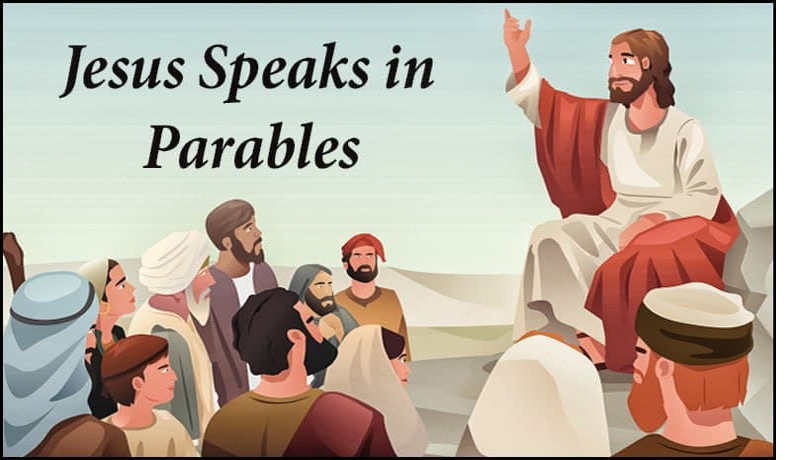
The parables show that Jesus was acquainted with human life in multiple ways and means. He was familiar with and comfortable describing people of all walks of life, from the uneducated poor to religious scholars and the rich.
(a) Some spoke of the common people - farmers, fishermen, builders
(b) Other spoke of managers of estates, finance ministers and judges
(c) Jesus also spoke of Pharisees and tax collectors and the rich
(d) Jesus spoke in the language of the people - he taught them at their level.
Listeners of any background or educational level could understand the messages of the parables, hopefully. Jesus taught this way to convey the message of salvation and the kingdom in a clear and simple manner.
A. There are Five Reasons for Parables.
1. Jesus did the will of His Father.
2. The accomplishment of prophecies.
3. It was a manner to teach the disciples.
4. It was reserved for the elect and all His followers or Christians:
(a) to stir up in them humility
(b) to work in their diligence
(c) to work in them - to take care of ...
(d) to understand the parable
5. The wicked man must not know the mysteries of God. (Not for those in darkness)
B. Here is an Explanation of the Five Reasons.
1. Jesus did the will of His Father.
Jesus did the will of His Father in heaven here on earth. It did not matter what he was doing. If it was miracles, teaching or parables he needed to be obedient to His father. Jesus tells his disciples that he seeks to obey God rather than please himself:
John 5:30 "By myself I can do nothing; I judge only as I hear, and my judgment is just, for I seek not to please myself but him who sent me".
2. A prophecy was fulfilled.
With the parable of the sower we see that a prophecy was accomplished. When Jesus was telling the people the parable of the sower a prophecy was fulfilled.
calloused; make their ears dull and close their eyes. Otherwise they might see with their eyes, hear with their ears, understand with their hearts, and turn and be healed."
Isaiah 6:9-10 He said, "Go and tell this people: "'Be ever hearing, but never understanding; be ever seeing, but never perceiving.' Make the heart of this people calloused; make their ears dull and close their eyes. Otherwise they might see with their eyes, hear with their ears, understand with their hearts, and turn and be healed."
He drew attention to an Old Testament that foretold He would speak about parables. Jesus did nothing which was not foretold. See also Matthew 13:14+15
3. It was a manner to teach the disciples.
The main aim of Jesus was to impart "the knowledge of the secrets of the kingdom of heaven" to His disciples. The disciples had been given the gift of spiritual discernment by which things of the spirit were made clear to them. Because they accepted truth from Jesus, they were given more and more truth.
4. It was reserved for all the elect and His followers. The aim was:
(i) to stir up in them humility: for they, seeing how parables contain many difficulties above their understanding, are forced to be submissively of themselves.
(ii) to work in them diligence in the means of knowledge. The disciples came and ask Him the meaning of the parables.
(iii) to work in them the care of keeping what they have learned.
(iv) for the Holy Spirit to help his followers to understand the parable.
Prayer is sometimes needed to get the full understanding of it. Believers have accepted Jesus and they have been given the gift of the Holy Spirit who guides them into all truth (John 16:13). He has opened their eyes to the light of truth and their ears to the sweet words of eternal life.
5. The wicked man must not know the mysteries. (Not for those in darkness)
Because of their reluctance or unwillingness to accept the grace offered to them. They do not understand it anyway. God offers them the same grace which was offered to His followers. These people were not interested and they lost their chance to be a part of the kingdom.

6. The main Purpose of the Parables.
For me the main purpose of the parables of Jesus was and still is to test every follower of Jesus of their earnestness in seeking the things of God, to know Him better and to understand Him.
(a) To sow seed.
Jesus used parables to sow spiritual seed. His teachings were designed and had a long term purpose to sow seed into people's lives that would grow and bear fruit.
(b) To guard the secrets of God.
God chose to obscure His plans to prevent the enemy from interfering with them. God keep secrets to reveal them at the right time to those who need to know.
(c) To reveal His sovereignty.
The parables reveal the sovereignty of God. The Holy Spirit can do that according to God's will and purpose.
(d) To reveal the Spirit of God.
Jesus revealed the work of the Spirit in all kinds of ways. Sometimes the Holy Spirit is not mentioned. Whenever the Kingdom of heaven is mentioned it is referring to the realm of the Holy Spirit.
Jesus constructed His parables so only those who were pure of heart and receptive to His teachings could understand them.
(e) To communicate Spiritual concepts.
The parables are skillfully painted mental "pictures" to help us understand the kingdom of God and other spiritual things we have never experienced. New Bible Dictionary: The parables are the appropriate form of communication for bringing to men the message of the kingdom, since their function is to jolt them into seeing things in a new way.
7. The Parables of Jesus are Three-fold in Purpose.
(a) Appeal.
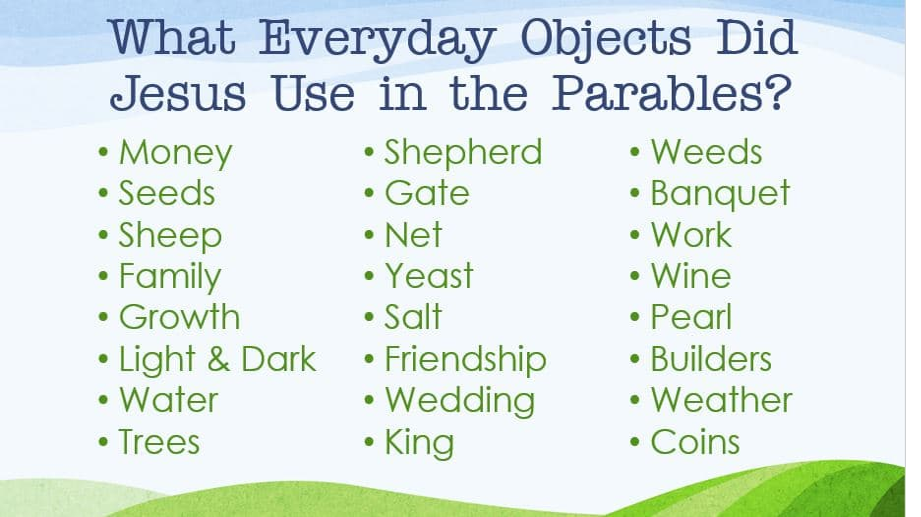
The first purpose is to appeal. Parables were spoken by Jesus to catch the imagination of the hearers - to capture their attention. Jesus employed vivid images such as a farmer sowing seed, a lost coin, and a landowner paying his workers. They were familiar with what Jesus used in His parables.
(b) Reveal and Conceal.
The other two purposes of Jesus' parables are opposites. Two things stand out. Parables simultaneously reveal and conceal.
They act as a kind of filter that sifts out the spiritual condition of the hearers and dividing them into two worlds. In one world a parable makes known the secret of the kingdom of God. But in the second world a parable remains only a parable, nothing more.
Parables reveal and teach those who are committed to Jesus and are looking for the truth, but they conceal or hide the truth from those who close their minds and harden their hearts (Matthew 13:10-17; Mark 4:10-12; Luke 8:10). They are riddles to them.
8. The Promises of the Parables.
(a) Foretold promise.
The prophets foretold that parables will be spoken by the Messiah. Jesus referred to it when he spoke of it in Matthew 13:34-35. This was foretold long before it happened.
(b) Hidden things will be revealed.
The parables contain things which were hidden before.
(c) Holy Spirit will help us to understand.
We need the Holy Spirit to reveal their meaning to us by His power.
(d) Seek guidance when we do not understand.
We will do the same as the disciples when we do not understand a parable. They asked Jesus but we will ask God for revelation, understanding and wisdom when we need it.
9. What are the Parables about?
The general theme is "The Kingdom of Heaven". The central focus of the parables is the coming of the kingdom of God and the resulting discipleship that is required. The parables cover many subjects related to discipleship in view of the coming of the kingdom: growth, prayer, judgment, commitment, salvation, money and possessions, rewards, pride, preparedness for His coming, forgiveness, etc.
10. Are Parables Still Relevant Today?
Sometimes we can not see how the parables are relevant to us, but we can be assured that every parable applies and also speaks to each one of us today. They provide directions to help us to navigate our journey to the eternal salvation which He promised. His expectations did not change over time. It still remains the same.
I will explore the parables. I hope and pray that you will hear what Jesus is saying to us by His Spirit and understand it and also apply it to our lives.