The Parable of the Leaven
Scriptures: Matthew 13:33 and Luke 13:21
Matthew 13:33 (NKJV) "Another parable He spoke to them: The kingdom of heaven is like leaven, which a woman took and hid in three measures of meal till it was all leavened."
Luke 13:21 (NIV) "It is like leaven, which a woman took and hid in three measures of meal till it was all leavened."
A. Information.
This parable consists of one simple statement that reveals eternal truth. While the statement Jesus makes is easy enough to understand on the surface, it has generated much debate and controversy throughout the years. Jesus did not explain this parable.
People of that time had only the Old Testament to lead them into the interpretation of the parable.
Many thought that a king will come to overthrow the ruling of powerful Roman Emperors. The Kingdom which Jesus came to reveal was radically different from anything the disciples had thought of. Jesus spent three years trying to help them making the transition from their natural understanding to a spiritual understanding. Jesus was leading them into something new. This applies to us to as He wants us to leave our comfort zones.
Jesus makes a comparison to the kingdom of heaven with leaven. One cannot deny that leaven is often spoken of in a negative sense in Scripture because of the permeating effect it has. Jesus compares the kingdom of heaven with leaven in the text. He is speaking of those who are saved by His good grace; those who will spend eternity with Him in heaven.
The parable of leaven follows the parable of the mustard seed.
B. Introduction on the Parable of Leaven
This parable is recorded in two gospels: Matthew 13:33 and Luke 13:21. It is presented immediately after the parable of the Mustard Seed. It is very short, one or two verses and Jesus did not give any explanation.
Matt 13:33 (KJV) "Another parable spoke he unto them: The kingdom of heaven is like unto leaven, which a woman took, and hid in three measures of meal, till the whole was leavened."
Luke 13:20-21 (KJV) "And again he said: Where unto shall I liken the kingdom of God? It is like leaven, which a woman took and hid in three measures of meal, till the whole was leavened." 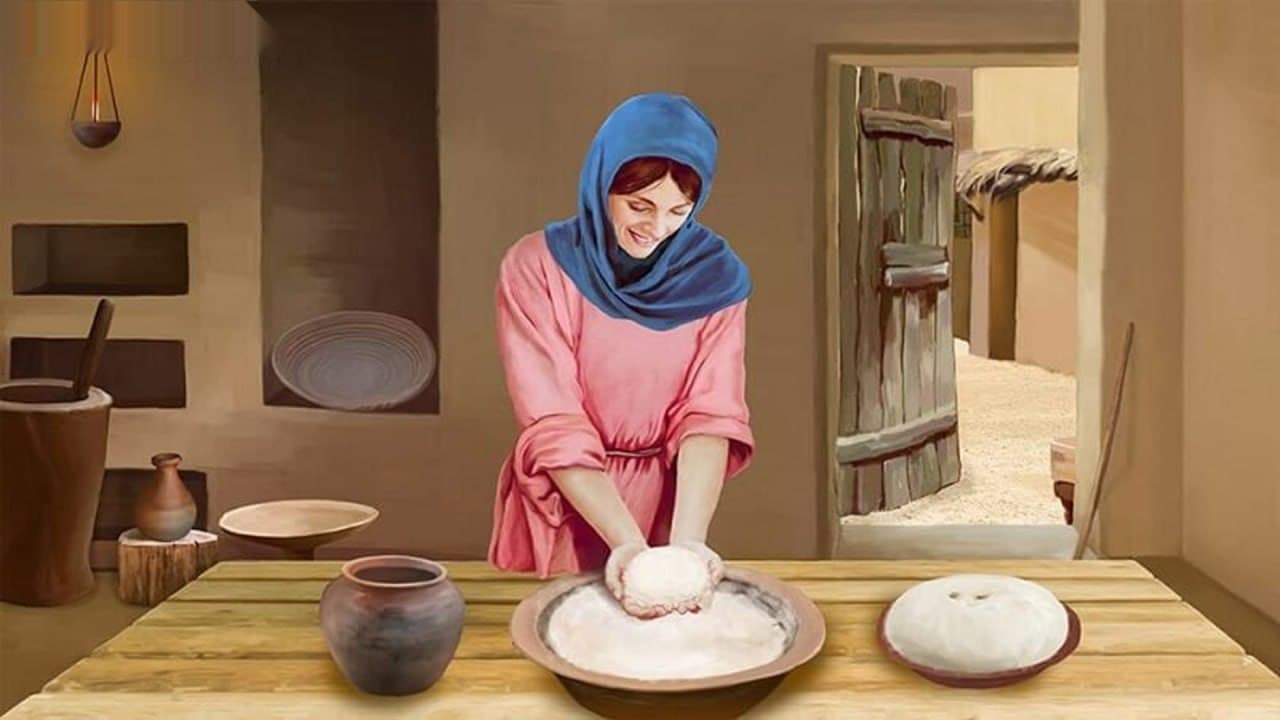
C. Key Terms used in this parable
Some key terms used in Matthew 13:33 and Luke 13:21.
1. Leaven - Yeast (see - What is leaven or Yeast?)
2. Woman - Who is the woman? (see - Who is the woman?)
3. Took - Possession (see - Possession of the Leaven)
4. Hid - Hide (see - Placement of the Leaven)
5. Three measures of meal - What is this? (see - What is "three measures of meal"?
6. All leavened - Permeation (see - Permeation of the Leaven)
D. Questions and some explanation of the terms.
1. What is leaven or Yeast?
Leaven was a small batch of older fermented dough, containing yeast and good bacteria. Leaven (yeast) is a kind of bacteria used as an agent in baking and brewing. It is today better known as yeast. This mixture was alive and stored for later use. It produces fermentation in dough when a part of this mixture is used. A tiny amount has the ability to permeate the whole. It grows quickly or causes the baking agent to rise on its own and expands. When used in bread it is casing the dough to rise and has a great taste and wonderful aroma when it comes out of the oven.
2. Who is the woman?
One unusual aspect of this parable is that the central character is "a woman." In all the other parables where a man is used it represents Jesus. Therefore, in the Parable of the Leaven, "a woman" does not represent Jesus.
Who does the woman represent? She represents the Holy Spirit. The Holy Spirit immersed us in Jesus Christ.
1 Corinthians 12:12-13 (NIV) "Just as a body, though one, has many parts, but all its many parts form one body, so it is with Christ. For we were all baptized one Spirit so as to form one body - whether Jews or Gentiles, slave or free - and we were all given the one Spirit to drink".
3. What is "three measures of meal"?
Jesus specifically says it was hidden in a meal - "three measures of a meal". When said this, he referred to a meal offering. This is the only bloodless offering. The disciples and Israelites were familiar with this offering. Much labor went into this offering. In the meal offering, Israelites offered the fruit of the ground and is presented in worship to the Lord.
"Every grain offering you bring to the Lord must be made without yeast, for you are not to burn any yeast or honey in a food offering presented to the Lord." (Leviticus 2:11)
Interestingly the offering must not contain leaven. "It must not be baked with yeast; I have given it as their share of the food offerings presented to me. Like the sin offering and the guilt offering, it is most holy" (Leviticus 6:17). The meal offering made to God must be kept pure and free from it.
Oil and frankincense were also to be added, ingredients often associated with joy or celebration. Frankincense was to be sprinkled over the top of the meal offering (Leviticus 2:2 and 15-16). Salt was also included, likely for its preserving powers.
4. What is the meal offering created?
There were specific instructions and options available. We find the instruction to make this meal offering in Leviticus 2 "If your grain offering is cooked in a pan, it is to be made of the finest flour and some olive oil". Oil was to be mixed into the meal offering (Leviticus 2:2 and 4-5). Salt was to be used in the offering which preserved it.
5. What is the spiritual meaning of this meal offering?
The meal offering represents Jesus. Here is a picture of Christ's ministry. Fine flour speaks of the evenness and uniformity of our Lord's character and service. He went through the crushing experience of scourging (Isaiah 5 3:4-5; Matthew 27:26-30) and the crucifixion (Matthew 27:33-50) for the sin of man.
During His earthly ministry Jesus went through the sifting process of Satan (Matthew 4:1-11) and the religious leaders of His day (Matthew 22:15-40), there was no sin found in Him (Hebrews 4:15).
Olive oil is a symbol of the anointing power of the Holy Spirit. The salt was all about God's covenant relationship with Israel; it was called "salt of the relationship between God and Israel.
This is further emphasized in Matthew 3:16 and John 1:32, where the Holy Spirit was poured upon Christ. The flour represents the humanity of the Lord, and the mixture of flour and oil represents the incarnation. The addition of frankincense to the meal offering makes it a sweet savoir, pleasing to God.
The meal offering represents the Messiah. Jesus is often referred to as "the bread of life", (John 8:35) and He will sustain us for all eternity.
6. What does this parable teach us about leaven?
1. Not to underestimate the potential of small beginning in a Christians life.
2. When the Holy Spirit applies the gospel there is no limit to what can happen in a person's life. The Holy Spirit is like leaven.
3. All these things happen, we are not aware that we are changed. Paul wrote about it in Philippians 2:13 "for it is God who works in you to will and to act in order to fulfill his good purpose."
I will discuss this in much greater detail in "F. Examinations of Leaven".
E. Key Aspects in the parable of leaven.
1. Possession of the Leaven
In the text there is a simple, yet profound truth. The woman possessed leaven and she hid that leaven in the meal. She could never have placed the leaven in the meal if she did not possess it. In order for the meal to be leavened, she had to possess the leaven to place it within the meal.
We know nothing else of this woman other than the fact that she possessed leaven. She took what she had and placed it within the meal.
2. Placement of the Leaven
She knew the leaven would not have an effect upon the bread until it was placed within the meal. It is interesting to note that she hid the leaven in the meal. While others may not have witnessed the action, the leaven would have a transforming effect on the bread. It would no longer be the same as before and soon it would be evident for all to see. Once the leaven was placed within the bread, it could not be removed.
3. Permeation of the Leaven
Once the woman introduced leaven to the meal, it began to work and spread. Leaven would very soon permeate the entire loaf. It was impossible to create a loaf of bread where only a portion of the loaf was leavened. The leaven would soon transform the entire loaf, leaving no part untouched or unchanged.
F. Examinations of Leaven
In this part we will examine the natural and also the spiritual meaning for us.
1. The Mystery of Leaven (Yeast)
In scripture leaven has a negative connotation mostly and is associated with sin, corruption, etc. There are many examples for negatives. We also found also some positive connotations and is associated with growth, like in the parable of leaven which Jesus told them.
There are other examples as well.
(a). Negatively used.
Lev 7: 12 (NIV) "If they offer it as an expression of thankfulness, then along with this thank offering they are to offer thick loaves made without yeast and with olive oil mixed in, thin loaves made without yeast and brushed with oil, and thick loaves of the finest flour well-kneaded and with oil mixed in."
During Passover (Pesagh) the Israelites were commanded to eat bread without yeast for seven days. It also specifies "homes". Exodus 12:19a "For seven days no yeast is to be found in your houses".
(b). Positively used
Matthew 13:33 (NKJV) "Another parable He spoke to them: The kingdom of heaven is like leaven, which a woman took and hid in three measures of meal till it was all leavened."
Luke 13:21 (NKJV) "It is like leaven, which a woman took and hid in three measures of meal till it was all leavened."
Yeast in the flour is a mystery. We cannot say how it is working. All we know is that Jesus said that the Kingdom of God is like that. We saw that a woman took the yeast and mixed it with a large amount of flour and then worked it through the dough.
This is how the Spirits works in us when He comes in. The important part is that it works - Thank God. Do not try to figure it out.
2. The Presence of Leaven (Yeast)
(a). The presence of yeast in an object (flour) is foreign.
When it is used with flour it is radically different and caused a dramatic re-action when it is going through a baking process. It is causing growth and expansion.
The presence of the Holy Spirit in us is foreign to us. The Holy Spirit comes from outside to dwell insde us. This happens when we accepted Jesus Christ into our lives. Jesus had to shed His blood for us. The blood had to precede the Spirit before coming to believers. The Holy Spirit comes to convict sin, righteousness and judgment. We have fellowship with God through the Holy Spirit. The Holy Spirit causes a radical change in our lives and we have a new nature.
(b). The Yeast has an auxiliary function.
Both the flour and the yeast need each other for the intended reaction. Both can exist on it's own. So they help each other and they support each other.
The Holy Spirit can exist without us and we can exist without the Holy Spirit. On our own we cannot change ourselves but with the Holy Spirit drastic transformations can take place inside us. We need the Holy Spirit to do this.
(c). We cannot just put yeast inside flour and then expect a re-action.
It needs to be applied and this is a process which is called kneading. The dough needs to be stretched and pressed so that the yeast can be applied to every part of the dough. This will cause that maximum result is the end.
The Holy Spirit must apply the gospel to us. The Word of God shows us the truth. By reading and studying we gather the Word of God inside us and that brings the transformation. This is how "kneading" is applied to every part of us. This is done through renewing the mind, etc. The Word of God is applied to our soul and body.
3. The Purpose of Leaven (Yeast)
The main purpose of leaven in the flour is to bring some changes to it. It is not intended to destroy the flour. There are three things which are happening.
(a). Communicate
Leaven "communicates" its own nature which has a definite effect on the flour.
The Holy Spirit "communicates" His nature to us. The grace of God is revealed to us through the Holy Spirit and brings love, joy and peace.
(b). Combine
The dough and the leaven "combines" to be effective when it is mixed. The Spirit combines what He is with what we are so that we might become what we were destined to be. The Holy Spirit and the Word of God combines. Both are needed to be effective in us.
(c). Change
The leaven changes the dough. The Holy Spirit in us causes the changes. We are transformed by the Holy Spirit in us. If we allow the Holy Spirit we will have both the fruit and the gifts. The Holy Spirit does His work when He become part of our lives.
4. The Process of Leaven (Yeast)
(a). The leaven spreads
The leaven spreads through the dough to affect the whole being while the Holy Spirit affects the whole of our being. The work of the Spirit begins when we accepted Him, it continues with the sanctification and end with the glorification.
(b). Leaven is very strong
Just a small amount of leaven is required to affect a very large batch of dough. With the Holy Spirit just require a seed of faith to start the big work in us.
(c). Leaven has a secret
We cannot see what is happening when the leaven goes into action. It effects can only be seen later. It might feel for you that you are not making progress in your spiritual life but He who started a good work in you will continue and complete it.
(d). Leaven is silent
There is no noise when the leaven is at work in the dough. When the Holy Spirit is at work it also does not make any noise.
(e). Leaven causes a great aroma
When the bread is removed from the oven we can smell it. It gives off a great aroma. The process of the Holy Spirit produces a wonderful aroma and it is pleasing to God.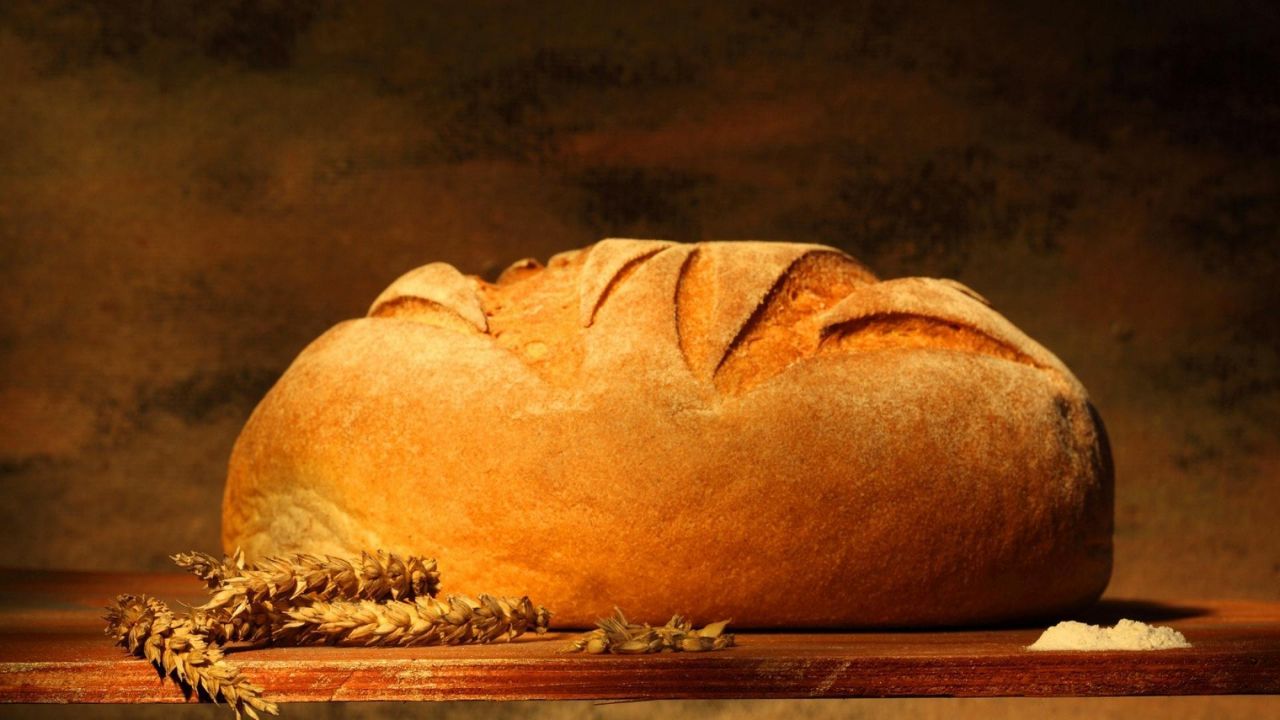
(f). Leaven cannot be removed.
Once the leaven is mixed with the dough it cannot be removed.
5. The Power of Leaven (Yeast)
Leaven (yeast) does its work only when it is mixed with dough.
The Spirit starts its work in us, the day when He is part of our lives.
The leaven is the means which the dough grows bigger.
The Spirit is the means by which positive results are brought about in us.
The Spirit causes things to change and be transformed in as when we start to walk in the light.
There comes a time when you realized that you have been completely transformed into something completely different in comparison before.
G. Conclusion
We have now studied and learned about the Parable of the Mustard Seed and now the Parable of Leaven. Let us compare the parable of the mustard seed with the parable of the leaven.
Both are very similar in their meaning and purpose but with some significant differences.
Comparison between the Mustard Seed and Leaven Parables
a. The parable of the mustard seed refers to the Church in the world. It refers to small beginnings and today we can see the growth all over the world.
b. The parable of leaven (yeast) refers to the soul of a believer. It refers to the spirituality in the Church and how the gospel can change a believer's life and the renewal of the Spirit inside the Church which is the Body of Christ.
c. The parable of the mustard seed refers to the external growth while the parable of the leaven refers to the inward growth or radical transformation.
d. The parable of the mustard seed refers to the progress in the Church while the parable of the leaven refers to the intensive transformation both inside the Church and also the inner part of a believer's soul.