The Parable of the Lost Coin
Scripture: Luke 15:8-10
A. Information.
Luke often presents his material in pairs. Here are some examples.
1. The man with the mustard seed and the woman mixing yeast
2. The Lost Sheep and Lost Coin parables form a pair.
Both The Lost Sheep and the Lost Coin reveals all the emotions of anxiety, worries, elation and joy in only a few sentences.
B. Introduction.
The parable of the lost coin occurs only in Luke 15:8-10 and follows immediately after the parable of the lost sheep.
The coin referred to here is a "drachma," a small Greek silver coin. This is the only place in the New Testament that a drachma is mentioned. A drachma was roughly equivalent in value to a "denarius", which was a day's wages for a day labourer.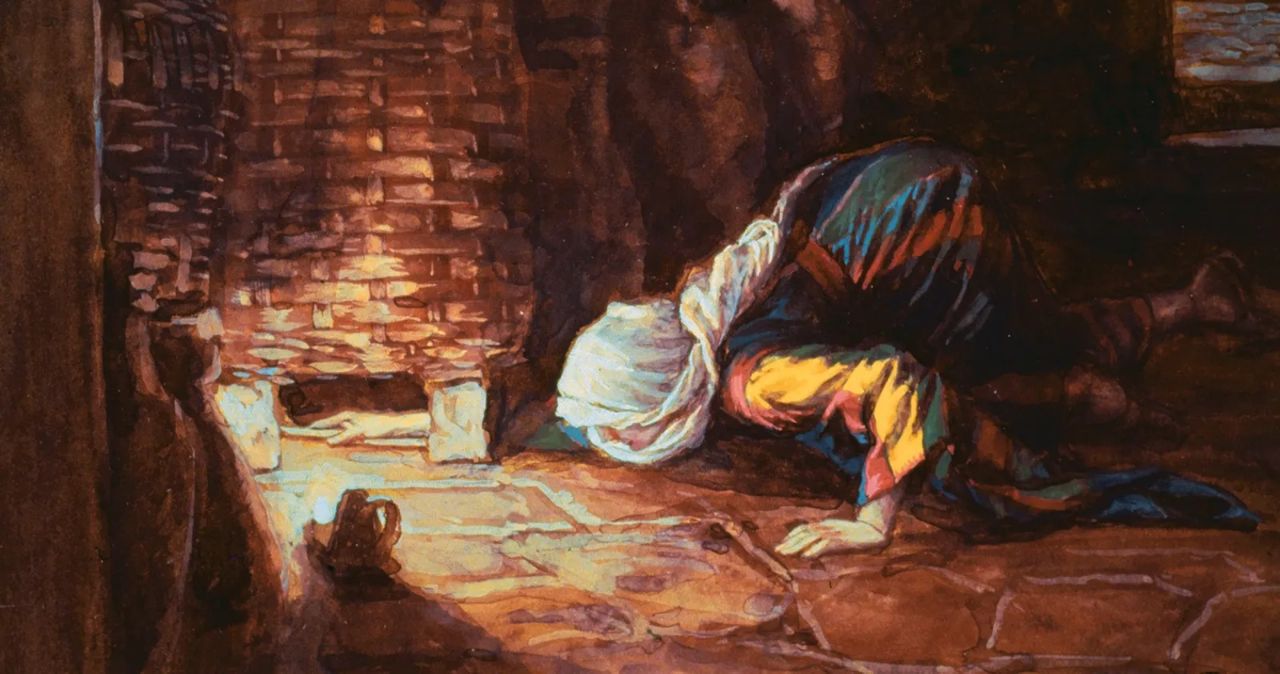
C. Jesus tells the parable.
1. The parable.
a. Jesus portrays a woman who has 10 coins.
b. One of her coins got lost, only 9 remains.
c. The woman begins the search in her home.
d. Houses of the people were often constructed without windows, maybe a small opening for ventilation and some light.
e. The floor would be constructed of basalt stone.
f. In the middle of the day it was dark in the house and she lights a candle for help.
2. Sweeping the House.
a. The woman starts with anxiety and worry over the lost coin.
b. All her worries put aside due to the pressing need to find the lost coin.
c. The woman would search and sweep frantically until she caught a reflected light or heard the tinkle of the coin on the hard floor.
d. She seeks the coin diligently and persists until she finds it.
3. Finding the Coin.
a. This gives way to joy and jubilation when the lost coin in found.
b. She calls her friends and neighbors together to rejoice.
c. Jesus concludes, "In the same way, I tell you, there is rejoicing in the presence of the angels of God over one sinner who repents."
D. Some key words used in this parable.
1. Woman - That the woman symbolizes the Holy Spirit
2. Coin - something valuable got lost (backslider)
3. Light a lamp - the lamp represents the gospel (Good News)
E. Meaning of the parable - The Lost Coin.
This parable reinforces the main point in the previous parable...The Lost Sheep.
a. That there will be "more joy in heaven" over one sinner who repents.
b. This parable's theme is similar to the others in this chapter: "The Father's yearning love for the lost". Such love is evident by the joy "in heaven" and "in the presence of angels" when just one sinner repents.
c. The lost coin still belonged to the woman. A sinner, when lost, still belongs to God. God directs his love toward the lost and erring. "But God demonstrates his own love for us in this: While we were still sinners, Christ died for us". (Romans 5:8)
d. Jesus showed God's love to the sinners and moral outcasts of the day. He taught them, he entered their homes, he ate with them. Because of this, he was given the name "friend of sinners" (Matthew 11:19).
F. The meaning of this parable pair - The Lost Sheep and The Lost Coin. 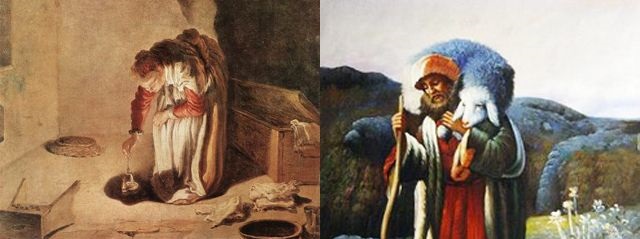
Now after we studied these two parables I want to look at them in a different way.
Here are some interesting observations.
1. We see in both that God loves sinners and backsliders.
2. God often refers to His people as sheep.
3. God does not give up on any sinner or backslider till they are found.
4. We see that heaven and the angels notice what is happening on earth.
5. There is a celebration in heaven when one returns.
6. Jesus used a lost sheep in the one and a lost coin in the other. Both are helpless. Both needs to be found and cannot do it themselves.
7. It is interesting that there were tax collectors present in the audience when Jesus told these parables.
Maybe the parable was directed at them, because they worked with coins.