The Parable of the Pearl
Scripture: Matthew 13:45-46 (NIV) "Again, the kingdom of heaven is like a merchant looking for fine pearls. When he found one of great value, he went away and sold everything he had and bought it".
1. Introduction.
This parable is very short and Jesus told it only to his disciples in a house after the multitude left. Jesus does not give a direct or detailed explanation of this parable.
Jesus begins by saying "again," which directly ties the meaning of this parable to the previous one - the parable of the Hidden treasure (Matthew 13:44)
The merchant finds one pearl of enormous value. He recognizes that the pearl is worth more than everything else he owns combined. He sells it all to obtain this extraordinary and valuable item.
Jesus told this parable to emphasize that the Kingdom of Heaven is so precious that one should be willing to give up everything they have in order to possess it. 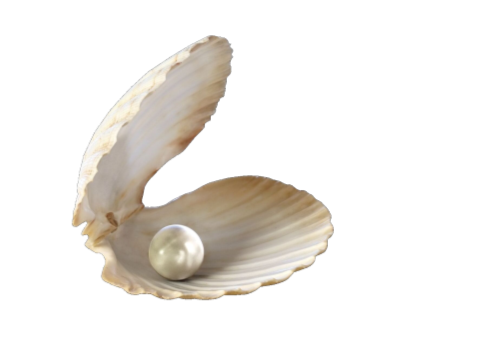
2. Summary of the Parable.
The parable of the pearl is very similar than the hidden treasure.
a. A merchant was searching for a fine pearl.
b. Then he finds the pearl which he was seeking.
c. He recognizes that the pearl is worth a lot.
d. He sold all his possessions to purchase this pearl.
e. The merchant knows that he got it for a bargain.
3. Some Key Terms used in this parable.
a. The Kingdom of Heaven
This kingdom represents the place where God rules and He alone reigns in the kingdom of heaven. And His kingdom is both a present reality and a future expectation.
The kingdom exists in the hearts of everyone who worships Christ as Lord. The kingdom OF God lives within us as believers.
b. The Merchant
The merchant or dealer represents the believer who is seeking to know more of Him and the Word of God. He is constantly searching for valuable things or pearls.
c. The Pearl
The pearl in this parable represents Jesus Christ and the salvation He offers, which is worth a great price; more than anything else in the world.
d. Sell Everything and Bought the Pearl.
This is referring to total commitment of the "merchant". He knows what he wants to do and push it through. We cannot buy our salvation.
Ultimately this merchant efforts were rewarded by the finding of Jesus Christ - the "Pearl" of great price.
He was seeking the special pearl. Having found Him, as presented in the Gospel, the sinner sold all that he had: that is to say, he forsook all that the flesh held dear, he abandoned his worldly companions, he surrendered his will and he dedicated or re-dedicated his life to God; and in that way, secured his salvation.
4. Let us look deeper at the Merchant.
a. This "Merchant Man" desires this "pearl of good value."
As one reads the New Testament, he is made to realize that what Jesus Christ desires more than anything else is to rule and reign in the believer's heart and life. He desires for believers to be submissive to His will and authority!
b. This Merchant Man regards this pearl as being of "great price."
Jesus desires us, but we should be of "great price" to Him when we follow Him.
c. This Merchant Man "sold all that He had to gain the great pearl."
"He sold all that He had," This implies that he laid down his old life because he is now a new creation in Christ and follow Him.
"For you know the grace of our Lord Jesus Christ, that though he was rich, yet for your sake he became poor, so that you through his poverty might become rich". (2 Cor 8:9 NIV)
d. This Merchant Man "sought the pearl."
In the parable he was searching and was rewarded in the end. He found the pearl.
No one could ever enlarge upon Peter's teaching in 1 Peter 1:18-19, which states: "For you know that it was not with perishable things such as silver or gold that you were redeemed from the empty way of life handed down to you from your ancestors, but with the precious blood of Christ, a lamb without blemish or defect."
5. Let us look deeper at the Pearl and its origin.
a. A pearl is of great value
The "pearl" was the object of the greatest value to the merchant man.
b. A pearl is a product of a living creature.
The pearl is the only gem that is a product of a "living creature." The kingdom of God is something that is ALIVE within every believer's heart.
c. A pearl is a product of "suffering."
The pearl is the answer to the injury that was inflicted upon the oyster. It is the offending particle that ultimately becomes the object of beauty! That which injured the oyster becomes a precious gem!
"We must go through many hardships to enter the kingdom of God," (Acts 14:22 )
d. The pearl is formed "slowly and gradually."
The pearl does not come into existence in a single day. There is a tedious process of waiting while the pearl is being slowly, but surely, formed, and although, salvation is instant, the process of the formation of the kingdom of God . . . takes a life time!
e. The pearl has a "lowly origin."
A beautiful pearl, originally had its home in the depths of the sea, amid the mire and filth, because that is where the oyster congregates. The oyster is a scavenger of the ocean. This lowly origin of the pearl reminds us of our humble beginning, who, but by the grace of God, are by nature creatures of the filth and mire and ruin of Adam's fall (See Ephesians 2:11-12).
f. The pearl is formed "secretly," down in the ocean's depths.
The process of God's kingdom, Christ ruling our hearts, is often unseen by the eye of man, secretly taking place within our life.
g. The pearl is an object selected for honor and exalted future.
That object in the ocean's depths, unseen by the eye of man, is gradually built up until, ultimately it has a position of importance, such as the diadem of a king's crown. It becomes a jewel of royalty, it was made for this!
This is what God wants to accomplish, by the power of the Holy Spirit working out the kingdom of heaven, Christ ruling and reigning in every area of the believer's life. Just as the pearl of "The Pearl of Great Price" had a lowly origin, and ultimately gained a position of dignity, honor and glory, so God will take the believer's character and disposition and work out something beautiful for His glory, if the believer will let Him accomplish this in his life.
h. A pearl is the result of the full attention of the oyster.
The oyster seeks to ease the irritation of the foreign substance by throwing off a secretion which forms over the sore and irritated spot. The oyster becomes weaker and weaker as it puts off this secretion, all of which adds to the formation of the "pearl." The pearl is made; or perfected, through the lingering, torturous, suffering death of the oyster. What makes the beautiful pearl seem so white, is this layer upon layer which is from the substance put off by the oyster during this process of irritation.
6. What God wants to accomplish.
What a beautiful picture of what God is seeking to accomplish in our lives during times of "irritation." Whenever experiences of difficulty or hardship come into the believer's life, he can respond in one of two ways:
1. He can either re-act in his own self, doing what he thinks is best for him, or,
2. He can submit to Christ's reign in his life and do what God wants done.
Should a grain of sand intrude into the eye, it would bring infection, maybe even the loss of sight, because of the reaction of the human eye. Its very nature is to protect itself, to rid itself of any foreign element that is distasteful or irritating to it. However, should that same grain of sand enter an oyster, instead of rejecting it, the oyster produces a concretion - a hard, compact mass formed by the precipitation of mineral cement within the spaces between particles, The oyster acts and it accepts the irritation! That offending particle ultimately becomes a thing of great beauty - a pearl of great price.
7. God's work in a Believer
What a wonderful picture of Christ's kingdom at work within the believer! Down in the ocean's depths lives a small animal encased in a shell, we call it an "oyster!" A foreign substance, such as a grain of sand intrudes, causing the oyster to exude a substance called "nacre" and covers whatever it is that causes the wound. The oyster repeats this process again and again, one layer after another of that nacre is cast out by that little oyster, until ultimately there is built up a priceless pearl!
8. Meaning of this parable.
This parable means that the Kingdom of Heaven is of such extraordinary value that it justifies the sacrifice of all earthly possessions to acquire it for a merchant who sells everything for one pearl of great price. Jesus told this metaphor to illustrate that once we have found God, we must surrender everything to Him. This means to give up our attachment to earthly possessions and our old ways of being before we discovered Christ.
9. Valuable Lessons from this parable.
a. Recognize the Value of God's Kingdom
The first lesson is this: just as the merchant recognized the great value of the pearl, Christians are called to recognize the true value of the Kingdom of Heaven. The Kingdom is what leads to your salvation.
b. Prioritize the Kingdom.
The parable teaches that the Kingdom of Heaven should be our top priority, worth giving up all earthly possessions to attain. This also means releasing attachments to anything that draws us away from God and our relationship with Jesus Christ.
c. Joy in Sacrifice.
There is joy in sacrifice when it is for something of greater value, much like the merchant's joy in selling all he had for the pearl. However, you will not experience this everlasting joy until you make a relationship with God your primary focus.
d. Active Seeking.
The merchant was not stagnant in his pursuit. He actively sought out fine pearls, which teaches Christians the importance of actively seeking God and His Kingdom. You should be actively reading God's Word in the Bible, participating in fellowship with other Christians, and praying daily.
e. God's Pursuit of Us.
A deeper lesson from this parable reflects God's pursuit of us, suggesting that we are of great value to God, who gave up everything to rescue and redeem us through Christ.
10. Application of this Parable to Our Lives.
If we understand the great price that Jesus Christ paid for us, and how precious we are in His sight, it should follow that we will not take our calling lightly. We will strive to show our unity with fellow believers. We will remember that we were bought with a price. In great joy, Jesus gave His all for us.
"Do you not know that your bodies are temples of the Holy Spirit, who is in you, whom you have received from God? You are not your own;" (1 Cor 6:19 NIV).
11. Contrast between the two Parables. 
Jesus was talking to His Disciples when he told both these two parables.
The message is aimed at someone who loves the Lord in both parables.
a. Hidden Treasure Parable
2015 - 1. The person refers to laborer, poorer person.
2015 - 2. The person stumbled upon the treasure
2015 - 3. The person is not an expert in treasures
2015 - 4. The person finds a treasure accidently.
2015 - 5. The person was not expecting the treasure
b. The Pearl Parable.
2015 - 1. The merchant is a business man, a rich person
2015 - 2. The merchant is seeking a fine pearl/s
2015 - 3. The merchant is an expert who knows pearls
2015 - 4. The merchant knows what he is looking for.
2015 - 5. The Merchant finds what he was looking for.
c. Spiritual application
The parable of the hidden treasure - The person just came across this relationship.
Some believers just stumbled upon this special relationship.
The parable of the fine pearl alludes to a search for a special relationship with God.
Some believers are seeking a special relationship with Him.
12. Conclusion on the two parables
Parallels between the Parable of the Treasure and the Parable of the Pearl
1. In both parables, the treasure is found by accident.
2. In both parables they found something tremendously valuable.
3. In both parables both men made a quick decision and act immediately.
4. Both men must give up all they have to obtain the treasure.
5. Most scholars identify the treasure and the pearl to represent Jesus Christ.
The intent of these parables is to convey that some rewards are great enough to be worth great
Sacrifices: the men may have to sell all that they had, but when they buy the field or the pearl, they gain the treasure, which is worth more than all that he sold.
When we find Christ, we are filled with joy and nothing can stop us from giving up our lifestyles, and in some cases even our careers or families to claim our reward.
Blomberg states - "Expresses the meaning of both parables succinctly: The kingdom of God is so valuable that it is worth sacrificing anything to gain it."